
STASIS #17
microhouse and the inversion of rave


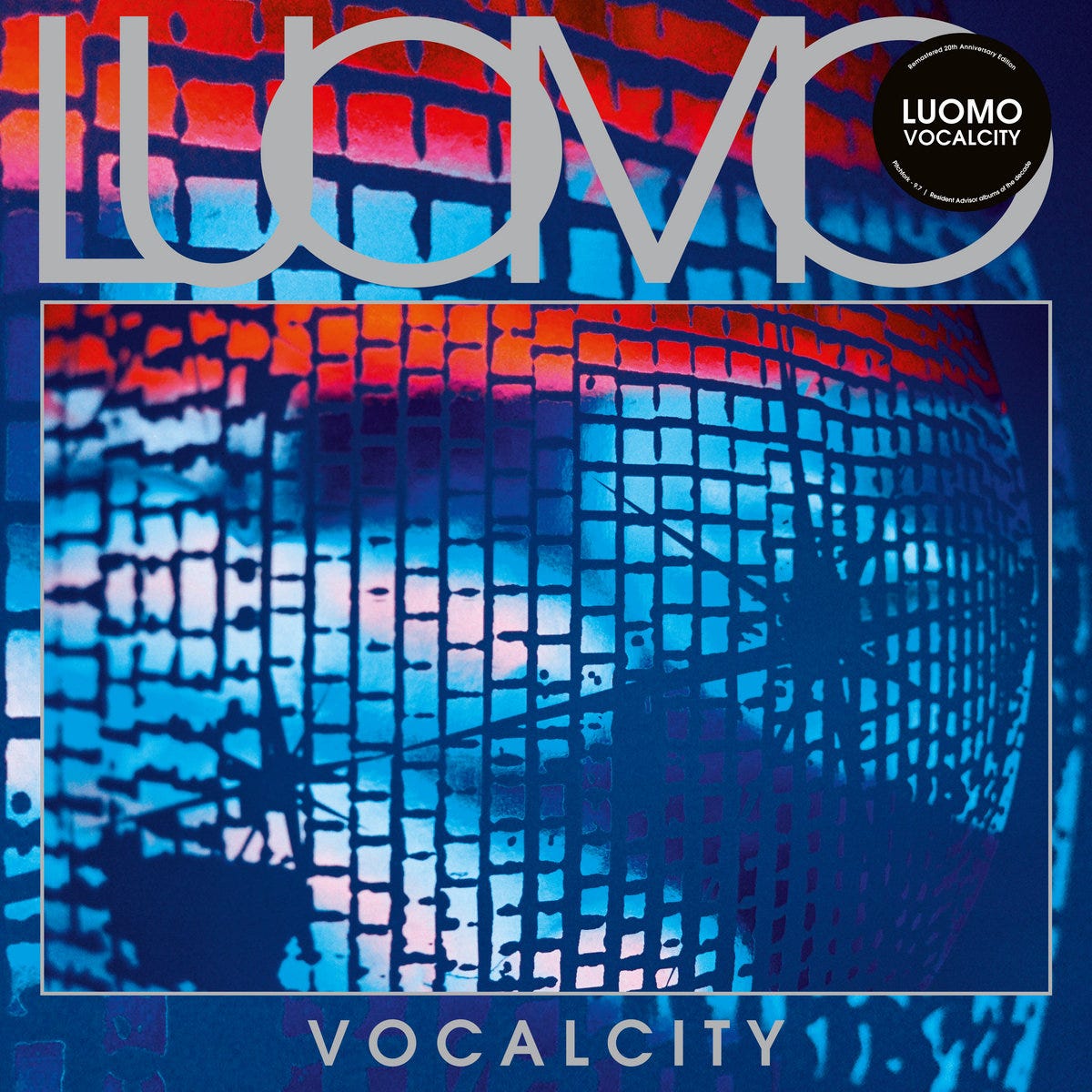
It’s a record for connoisseurs. One that tests whether someone truly understands the development of house music this century. Never before has an album in the genre been as refined as Luomo’s Vocalcity.
In 2005, Philip Sherburne explained for Pitchfork what makes Vocalcity so special. This was five years after the album’s release on Force Tracks, a sublabel of the leading record label Force Inc. During those five years, producer Sasu Ripatti built his reputation. Sometime in the late nineties, the Finn decided to start producing music himself. As a gifted jazz drummer, he explored the edges of pop music. Under the aliases Vladislav Delay, Sistol, Uusitalo, and Luomo, he explored ambient, techno, and house. Ripatti excels in all these genres and earns much praise for his production skills. His reclusive nature and refusal to do interviews contribute to building his somewhat secretive image. In the early 21st century, it was still possible to fly under the radar despite the existence of the internet. That only changed with the rise of what we now call social media. Sherburne is clear about it in Pitchfork: in his view, Vocalcity has made a vital contribution to defining the microhouse subgenre, and the album elevates the clicks ’n cuts movement to an unprecedented level.
In the liner notes of the Clicks + Cuts 2 compilation, which he cites in his Pitchfork review, he writes:
‘The Next Episode in House’ sounded like the kind of sweeping, appropriationist, Zeitgeist-stroking statement that Force would make -- but damned if it weren’t true. If anything, it sounds even truer today. It’s not that Luomo advanced the cause of house music in a way that his predecessors (Chez Damier, Derrick May, and Maurizio, to pick three) didn’t manage. But there was nothing else that sounded like ‘Vocalcity’ at the time, and there’s been precious little that sounds like it since, including Luomo’s slightly disappointing, ill-fated 2003 follow-up, The Present Lover.
What makes Vocalcity so unique? To find out, we need to go back to 2000.
That year, Ripatti released three impressive albums. Under his best-known alias, Vladislav Delay, he released Entain and later that year Multila, a compilation of material previously released on Basic Channel’s sublabel Chain Reaction. As Uursitalo, he released Vapaa Muurari, and then Vocalcity as Luomo. All three are masterpieces. That says a lot about how Ripatti mastered (pop) music production techniques in the late 1990s. Around the turn of the millennium, he lived in Helsinki, and his home studio was his main hangout. He remembers almost nothing about making Entain and Multila. He’s brief about Vocalcity in Self-Titled (2010):
The album that started my interest in club and house music. It’s the worst Luomo album by far, practicing and all. I can understand the charm people see in it, but I’m sick of the stigma it gave and left for the whole project.
Nine years earlier, Ripatti told Sherburne that he knew nothing about house music before Luomo. In The Wire, he recalls the time when he left the jazz scene and found comfort in the solitude of his own home studio. Bored with the limited options, he decided to experiment. This led him into the worlds of techno, ambient, and house. Ripatti describes Vocalcity as a mistake he hopes to correct with the second Luomo album. Sherburne doesn’t hold back. He focuses his article on the new microhouse genre on Vocalcity, which, in his view, is the genre’s defining album.
Microhouse captures the spirit of one of the most exciting times in recent history. Pop culture often signals social change. In the late 1990s, the idea of a world where everyone lives freely and prosperously began to show signs of strain. A network of international organizations, including the United Nations, the World Bank, the International Monetary Fund, and the World Trade Organization, has begun to exert an increasingly significant influence on social developments. In the excellent book Empire (2000), Michael Hardt and Antonio Negri describe this shift. The grip of multinationals on the lives of individuals grew ever stronger by placing empty and essentially meaningless concepts like freedom, equality, and peace at the center of their product sales (Naomi Klein’s No Logo: Taking Aim at the Brand Bullies (1999) contains a fine analysis). Developments in pop culture ran parallel. In the second half of the 1990s, subcultures rapidly emerged without any apparent loss of power. In 1997, drum’n’bass became the soundtrack of the emerging economy. No advertising was complete without it. Everything blended, and at first glance, that seemed like a positive development. This new capitalism (neoliberalism, as we now call it) wasn’t so bad.
Until the cracks became impossible to ignore.
Electronic dance music didn’t signal the end of capitalism. The scene grew darker and more impersonal as drugs shifted from ecstasy to speed and cocaine (see Simon Reynolds’ Energy Flash: A Journey Through Rave Music and Dance Culture (1998)), and the endless, ongoing rave was gradually forced into the nine-to-five system. From that point on, raves were only happening on weekends at festivals run by major brands.
Pop culture reflected and portrayed this development. In films like The Truman Show (1998), Existenz (1999), Fight Club (1999), and The Matrix (1999), the chaos and unsettling atmosphere of the late nineties becomes clear. Drum’n’bass moves in two directions: accessible live acts that compete with pop music and dark, intense underground styles. In techno, minimalism dominates: kick drum, hi-hat, and nothing else.
Then the real cracks appear.
First, there’s the unprecedentedly violent police crackdown on anti-globalization protesters during G8 and WTO meetings (empire, that is). Then, the collapse of the commercial side of the internet and the irrational yet intense fear of the Y2K bug (the idea that all computer systems worldwide would stop working in 2000 because their clocks were set to 1999). And finally, there’s the 9/11 attack on the World Trade Center in New York.
Microhouse reflects the era that followed the realization that the nineties didn’t bring utopia. It turns the anger and rigidity of minimal techno into something intimate and playful. A place to indulge and enjoy. A place to disappear. The space that minimal leaves is filled with sounds, glitches, and details. It brings house to the individual. At a microhouse party, there is, to be honest, no real togetherness. You party and dance together, but you celebrate in your own mind. Microhouse is small. It doesn’t shout from the rooftops. It says: the idea of a house as a global movement where individuals merge into one group, where nothing matters anymore (skin color, sexual orientation, origin) has failed. Let’s move on quietly and without grand gestures, and still have fun.
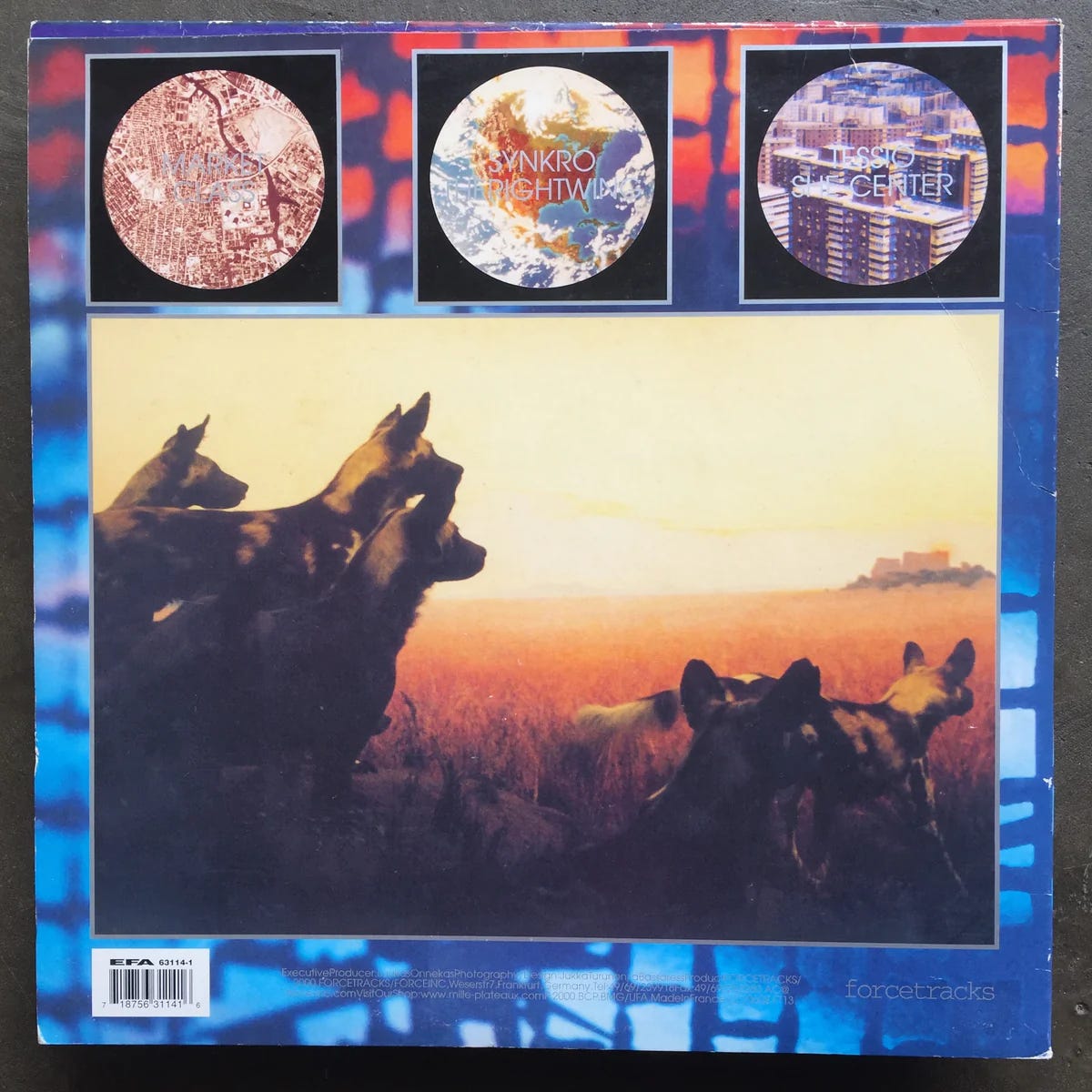
Vocalcity isn’t the first album to embody this. Between 1998 and 2000, releases that could be classified as microhouse came out, mainly on German labels such as Perlon, Kompakt, Force Inc, Mille Plateaux, Trapez, Playhouse, Klang Elektronik, Profan, and Delsin. However, Vocalcity is different. It’s hard to explain why. Sherburne immediately senses something special happening and calls it a key album. At Resident Advisory, Lee Smith’s poll for the best albums of the 2000s is short on superlatives.
While other microhouse producers had been dabbling in rarefied, glitch-heavy experiments, Vladislav Delay’s Luomo alter ego was arguably the first artist to successfully meld next-level production techniques with a rich, emotionally charged soul. From the endlessly shifting plains of ‘Synkro’ to the vocal tearjerker ‘Tessio’, it set the tone for a decade that would see the conservative boundaries of what we once knew as house transformed beyond all recognition.
Vocalcity was released twenty-five years ago. The recently re-released, remastered version from 2020 showcases why all that enthusiasm is justified. The six tracks are instrumentally related to the material Ripatti also used for the Vapaa Muurari album. The foundation is always the same: kick drum, warm bassline, hi-hats, minimal melody lines, glitches, and chopped-up vocals. The latter steal the show. In the opener ‘Market’, it takes until halfway through the track before the vocals are fully audible; before that, only the singer’s breathing and sighing can be heard. In the masterful ‘Synkro’, Ripatti goes even further. For the first six minutes, snippets of vocals are sprinkled across the bassline like glitches, until suddenly the complete sentence appears:
“Because you move / The way you move / I got to keep on moving with you”.
It’s the complexity of 2000 reduced to its ultimate simplicity. The vocals are telling. In ‘Market’, it sounds:
“Like there’s nothing in the world that I need from you / Like there’s nothing in the world that I feel for you / I want everything from you / I take everything from you.”
A description of market forces in neoliberalism? No idea. Asking Ripatti isn’t an option. He won’t talk about Vocalcity. Well, except for the fact that the album is a mistake. ‘Tessio’ is the most accessible track. A passionate, introverted pop-house track with beautiful, unadulterated vocals. On The Present Lover (2004), the follow-up Ripatti promised to make up for the Vocalcity mistake, there’s a version of ‘Tessio’ that doesn’t even come close to the original. It clearly reveals the difference between that first Luomo and the albums that followed. Yes, The Present Lover, Paper Tiger (2006), and to a lesser extent Convivial (2008), and Plus (2011) are excellent to good albums. However, they lack the playfulness, imperfection, openness, and especially the naivety and directness of Vocalcity.
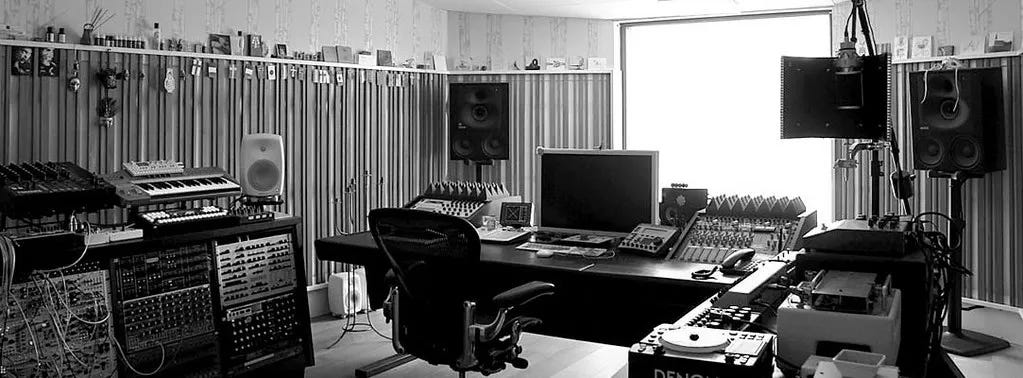
I spoke to Ripatti several times this century. I visited his studio in Berlin and, during my time in Cologne, chatted with him for a while at one of the private Kompakt parties. We never spoke about Vocalcity. The last time I talked to him, he had just left Berlin for the tranquil island of Hailuoto in the Baltic Sea. We called, and he got irritated because I thought his latest productions fit so well with the latest trends in electronic music.
This is how I quoted him at that time (2018) in Gonzo (circus):
The world is changing, and I’m stuck in the world I’ve always been in. Musically speaking, that is. The new generation has an entirely different idea of what electronic music is and should be. There’s no room to discuss creativity anymore.
We chatted for a while longer about his recent collaborations with Max Lodenbauer (with whom he forms Heisenberg) and Moritz von Oswald. About his new record label named after himself, the demise of the dance floor and the DJ, and how awful the Berlin dance scene actually is. I didn’t dare ask him about Vocalcity.
Luomo’s Vocalcity was released in 2020.
_ _ _
SHORTS
No real SHORTS this time, but my current top 10 of microhouse tracks (minus Luomo). Ask me now, and I’ll give you another list.
Jan Jelinek - ‘Rock in the Video Age’ (2001)
-
farben - ‘farben says love to love you babe’ (2002)
-
Jurgen Paape - ‘So Weit Wie Noch Nie’ (2002)
-
Closer Musik - ‘Closer Dancer’ (2002)
-
Akufen - ‘Skidoos’ (2002)
-
Justus Köhncke - ‘Timecode’ (2004)
-
Jon Hopkins - ‘Collider’ (2013)
-
The Acid - ‘Ghost’ (2014)
-
Actress - ‘X22RME’ (2017)
-
DJ Koze - ‘Illumination’ feat. Roísín Murphy (2017)
-
Sofia Kourtesis - ‘Corazón’ (2025)
_ _ _
HYPERSPEED
Alien: Earth on FX Networks is pretty good. Don’t expect a continuation of the Alien universe. The series focuses on not-human intelligence and, like the Westworld series, shows how unintelligent humans actually are.
-
In 1999, Drexciya released their Tresor debut album Neptune’s Lair. Tresor is going to re-issue this classic electronic music album, but first there is the re-issue of the 12” ‘Fusion Flats’. For the first time released on a digital format.
-
My favorite radio show BenedenNAP visited Berlin, bought a lot of new vinyl, and recorded a new episode. mixcloud.com/benedenNAP/296-benedennap-is-ook-weer-eens-wezen-shoppen-in-berlijn.
-
A bit more than fifty minutes of analogue synth magic by Heerlen-based duo ItTakes2ToTechno at Koempel Collective.
-
Amsterdam-born and raised artist Sophie Straat just released a new album, Wie De Fak Is Sophie Straat, and it is pretty cool.
-
Looking forward to visiting Five Friends at the Museum Ludwig in Cologne, which tells the story of the influential yet often overlooked friendship between John Cage, Merce Cunningham, Jasper Johns, Robert Rauschenberg, and Cy Twombly.
-
Is capitalism dead? According to Epoch Philosophy, it is.
-
On Friday, October 10, the exhibition about other intelligences opens at Mu in Eindhoven. mu.nl/expo/other-intelligences.
-
Plastic Pills is diving into the dark mythology of modern advertising.
-
Until next time!
Vocalcity blijft vet goed, ik zet het nog weleens op. Grappig dat Ripatti daar zelf anders over denkt, maar dat is ook wel weer typisch voor een producer. Paper tigers vind ik ook nog steeds super. Microhouse blijft een prettig genre, mooie lijst.